Forgotten History
Palace of Placentia
London, United Kingdom
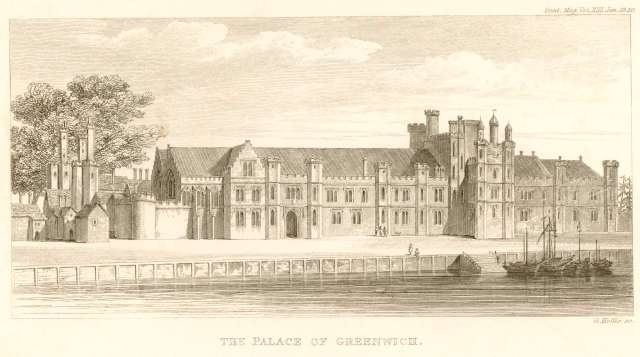
The Palace of Placentia, also known as Greenwich Palace, was an English royal residence that was initially built by Prince Humphrey, Duke of Gloucester, in 1443. Over the centuries it took several different forms, until it was turned into a hospital in the 1690s. The palace was a place designed for pleasure, entertainment and an escape from the city. It was located at Greenwich on the south bank of the River Thames, downstream from London. On a hill behind his palace, the duke built Duke Humphrey's Tower, later known as Greenwich Castle; the "castle" was subsequently demolished to make way for the Royal Observatory, Greenwich, which survives. The original river-side residence was extensively rebuilt around 1500 by King Henry VII. A detached residence, the Queen's House, was built on the estate in the early 1600s and also survives. In 1660, the old main palace was demolished by Charles II to make way for a proposed new palace, which was only partly constructed in the east wing. Nearly forty years later, at the behest of Queen Mary II, the Greenwich Hospital (now called the Old Royal Naval College) remodelled this wing, expanded, and rebuilt on the site.
- Category
- Forgotten History
- Location
- London, United Kingdom
- Coordinates
- 51.48222, -0.00667
- How to get there
- Google MapsApple MapsOpenStreetMap
- Wikidata
- Q1424839
What is Palace of Placentia?
Palace of Placentia is a Forgotten History place on VeroMaps. Other places close by: Statue of George II, Queen's House, Spanish Galleon, Statue of William IV.
Where is Palace of Placentia?
Palace of Placentia is in London, United Kingdom. Coordinates: 51.48222, -0.00667.
How do I get to Palace of Placentia?
Palace of Placentia is at London, United Kingdom (51.48222, -0.00667). Enter these coordinates in Google Maps, Apple Maps or OpenStreetMap for walking, cycling or driving directions.